FPT Software — E-recording platform for the US market
Analysing how legal and administrative documents get recorded and notarised electronically for the US market, and shaping the platform with an AI-OCR prototype — from pain points to a BOD presentation and UAT.
E-recording for the United States
Within a 30-person delivery unit at FPT Software, I worked as a Business Analyst on an e-recording platform for the US market — electronic recording and notarisation of legal and administrative documents, replacing paper-based submission and processing. An AI-OCR initiative aimed to automate data extraction from the documents flowing through the platform.
Manual document workflows, strict requirements, a case still to be proven
- Recording and notarisation workflows were document-heavy and manual — slow, costly and prone to data-entry errors.
- US customers have precise procedural and compliance requirements; the platform had to fit them, not the other way round.
- The value of AI-OCR had to be proven against real pain points and real documents, and leadership needed an evidence-based picture to decide on investment.
Pain points → prototype → board presentation → UAT
- Analysed business pain points across the recording and notarisation workflows.
- Supported the AI-OCR prototype for extracting data from submitted documents.
- Presented findings and the prototype to Board-of-Directors-level leaders.
- Collaborated with customers to implement feature upgrades that improved usability, based on behaviour data.
- Supported UAT and integration testing, helping reduce release defects.
Evidence-driven analysis
Discover
Walkthroughs of the as-is recording / notarisation flows with customers; documented pain points and their impact.
Model
As-is / to-be process models; identified where OCR + AI removes manual steps and where compliance constraints apply.
Prototype
Supported the AI-OCR prototype; validated extraction against real documents and user behaviour.
Present
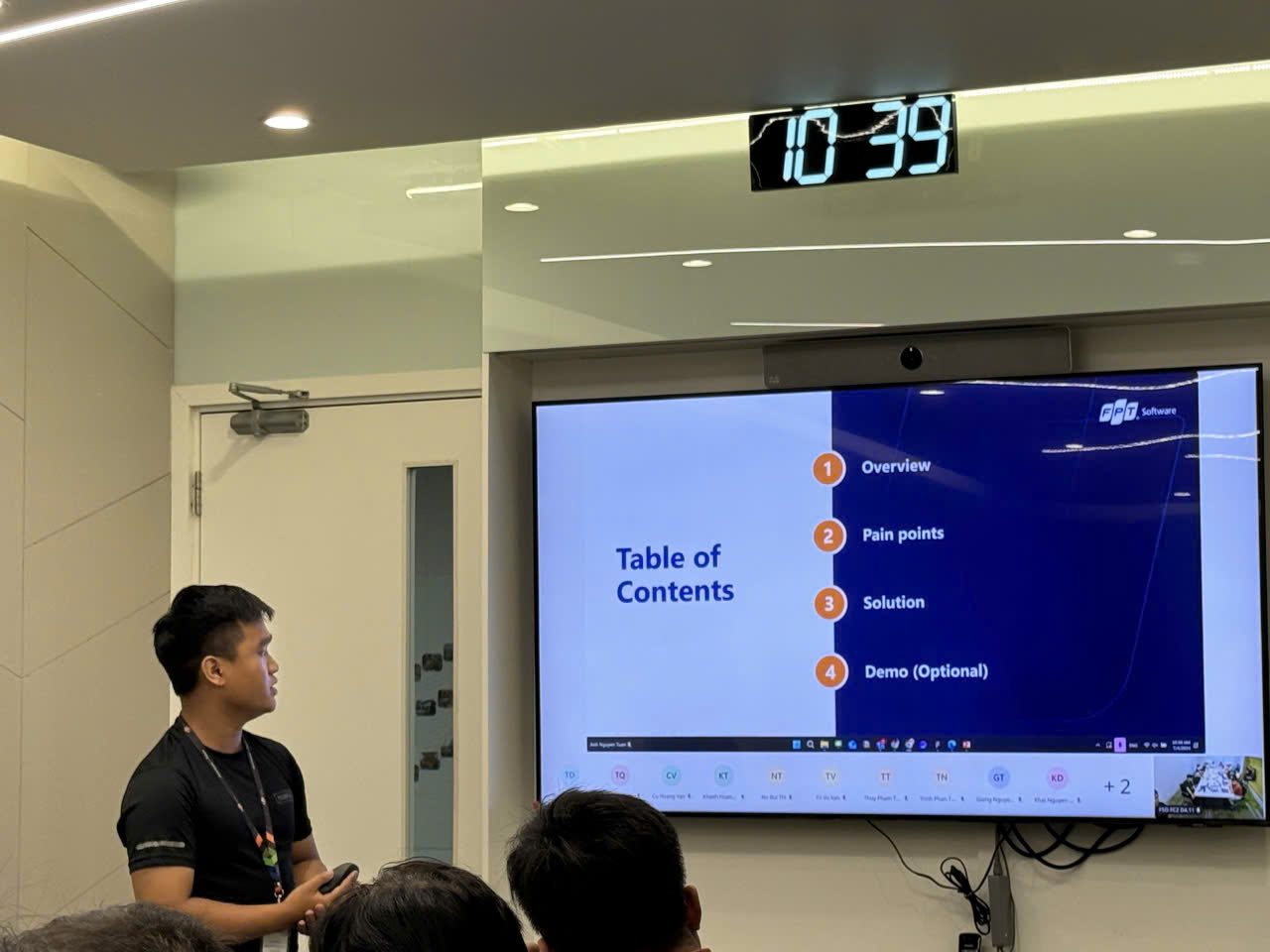
Structured findings — overview, pain points, solution, demo — for the Board of Directors.
Verify
UAT and integration test support; usability upgrades driven by usage data.
Analysis deliverables
A decision leadership could make
Takeaways
- Executives decide on pain points and evidence, not on technology — lead with the problem.
- In regulated workflows, the to-be process is only as good as its compliance constraints — model them early.
- Being present in UAT closes the loop between what was analysed and what actually shipped.
Moments from the project